
"democratic thought"
100 article(s) found

Turkish coffee shops promote the British democratic revolution
The medieval theory of divine kingship began to crumble in England in the seventeenth century, and after the Glorious Revolution the basis of government had shifted from kings as God's agents on earth to the hands of people bound together by social contracts. After experiencing this great historical turning point, it can be said that the creed of modern democratic society, that is, the will of heaven, was formed. Ren Min Tong
Many people's Cafe-Democratic Management Model
This is a cafe with an average age of 25 and co-funded by 79 people; it promotes a democratic management model and they position the business model as an offline SNS. "Entrepreneurship" magazine interview / Zheng Jiangbo Xia Hongwen / Xia Hong mosquito er Niu (net name) may not have thought of the idea that came out within an hour, when she wrote on Douban on January 6th with the title: let's spend 2000 yuan

Rwanda coffee beans introduction bourbon gene mutation coffee beans history story flavor taste characteristics description
Rwandan coffee plays an important role in the country's economy, contributing significantly to foreign exchange earnings and monetization of the rural economy. About 95% of Rwanda's coffee plants are high-quality Arabica varieties of bourbon coffee. Relatively small numbers of Catuai and Caturra varieties are also planted. The types of coffee beans grown in Rwanda include Caturra, Catuai, Bourbon (Arab

The enlightened trend of thought was brought back to the United States from the French Cafe Pucco.
The Encyclopedia: a Dictionary of Science, Art and Technology, published from 1751 to 1780, contains 35 volumes, including 71818 articles and 3129 pictures. Voltaire, Diderot, Rousseau and Montesquieu are all among the editors. They regard the Encyclopedia as a tool to openly provide common sense, secretly destroy superstition, and completely pour out the ideas of the Enlightenment.
The Development of Coffee Culture in the United States the enlightened trend of thought was brought back to the United States from the Pucco Cafe in France.
The Encyclopedia: a Dictionary of Science, Art and Technology, published from 1751 to 1780, contains 35 volumes, including 71818 articles and 3129 pictures. Voltaire, Diderot, Rousseau and Montesquieu are all among the editors. They regard the Encyclopedia as a tool to openly provide common sense, secretly destroy superstition, and completely pour out the ideas of the Enlightenment.

An introduction to the characteristics of fine coffee beans in the manor area
After the first World War, the long-standing dissatisfaction of the Ugandan people with colonial rule finally broke out. A national general strike and rural riots broke out in 1918. In 1919 Buganda launched a democratic movement under the leadership of the Bataka Party and the African Farmers' Union of Uganda. In 1921, Uganda's first national political party, the Ugandan National Congress Party, was established and proposed the implementation of universal suffrage.
Global Business Classic: a Cafe with 78 shareholders
78 shareholders gathered together to build a cafe with good institutional design, respect for democratic proceedings, mutual trust and tolerance. The cafe is flooded. Please come and help the shareholders in Beijing. At 10:00 in the evening on November 9, many people's cafes sent the first message for help on Weibo. The flood was opened by this group of young people who came together because of the coffee shop.

Description of Coffee Flavor in Berman Manor in Kenya; introduction to the taste of varieties in producing areas
Guatemala is a multi-party, independent democratic republic. The Constitution promulgated on 15 January 1986 provides for the separation of legislation (the Guatemalan Congress), law enforcement (the President and Vice-President) and the judiciary (the Supreme Court), belonging to the system of separation of powers. Congressional and presidential elections are held every four years, and all citizens over the age of 18 have the right to vote, while soldiers do not have the right to vote. Congress orders the most
The years when coffee culture cafes were banned
A cup of coffee has been drunk for 350 years-in the days when cafes were banned, modern people can drink coffee as they like, but coffee has had a rough ban in history. It is said that the world's first ban on cafes can be traced back to the holy place of Mecca in 1511. The rulers thought that the parties on the coffee shop table would threaten their authority and closed all the cafes in the city.

Colonial Coffee Garden, a microcosm of cosmopolitanism
Modern people can drink coffee as much as they like, but there has been a rough ban on coffee in history. It is said that the world's first ban on cafes can be traced back to the holy place of Mecca in 1511. The rulers thought that the parties on the coffee shop table would threaten their authority and closed all the cafes in the city. As a result, the ban was repealed automatically because the Sultan fell in love with drinking coffee. At the beginning
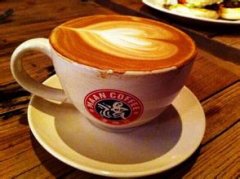
Common sense of Coffee Culture Cafe was banned
Modern people can drink coffee as much as they like, but there has been a rough ban on coffee in history. It is said that the world's first ban on cafes can be traced back to the holy place of Mecca in 1511. The rulers thought that the parties on the coffee shop table would threaten their authority and closed all the cafes in the city. As a result, the ban was repealed automatically because the Sultan fell in love with drinking coffee. At the beginning

Coffee Culture History Cafe was banned in the years
Modern people can drink coffee as much as they like, but there has been a rough ban on coffee in history. It is said that the world's first ban on cafes can be traced back to the holy place of Mecca in 1511. The rulers thought that the parties on the coffee shop table would threaten their authority and closed all the cafes in the city. As a result, the ban was repealed automatically because the Sultan fell in love with drinking coffee. At the beginning

Has there been a rough ban on coffee in history? Coffee history
It is said that the world's first ban on cafes can be traced back to the holy place of Mecca in 1511. The rulers thought that the parties on the coffee shop table would threaten their authority and closed all the cafes in the city. As a result, the ban was repealed automatically because the Sultan fell in love with drinking coffee. When the Venetians first brought coffee to continental Europe, Pope Clemens VIII took a sip and announced the coffee.

The development of cafes the years when cafes were banned
Modern people can drink coffee as much as they like, but there has been a rough ban on coffee in history. It is said that the world's first ban on cafes can be traced back to the holy place of Mecca in 1511. The rulers thought that the parties on the coffee shop table would threaten their authority and closed all the cafes in the city. As a result, the ban was repealed automatically because the Sultan fell in love with drinking coffee. At the beginning
The historical development of cafes the years when cafes were banned
Modern people can drink coffee as much as they like, but there has been a rough ban on coffee in history. It is said that the world's first ban on cafes can be traced back to the holy place of Mecca in 1511. The rulers thought that the parties on the coffee shop table would threaten their authority and closed all the cafes in the city. As a result, the ban was repealed automatically because the Sultan fell in love with drinking coffee. At the beginning
Coffee producing area African boutique coffee Ethiopia
Ethiopia Coffee in Africa the full name of Ethiopia Federal Democratic Republic (formerly known as Abyssinia) is a country located in northeast Africa. English name: The Federal Democratic Republic of Ethiopia, Ethiopia is the country of origin and hometown of coffee. The most famous coffee beans in Ethiopia are Yega Xuefei.

Ethiopian coffee is a coffee bean.
Origin: The Federal Democratic Republic of Ethiopia (formerly Abyssinia) is a country located in northeast Africa. The Federal Democratic Republic of Ethiopia, Ethiopia is the country of origin of coffee and the hometown of coffee. The most famous Ethiopian coffee beans are: Yega Shefi, Harald, Sidama Mocha Coffee
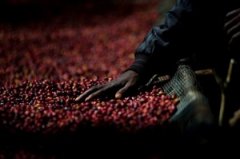
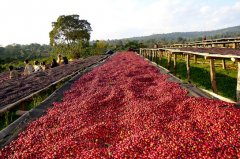
The hometown of coffee in eastern Africa, Ethiopian boutique coffee beans.
Ethiopia Coffee producing area: the full name of the Federal Democratic Republic of Ethiopia (formerly known as Abyssinia) is a country located in northeast Africa. English name: The Federal Democratic Republic of Ethiopia, Ethiopia is the country of origin and hometown of coffee. The most famous coffee beans in Ethiopia are Yega Xuefei and Harald.

There has been a rough ban on coffee in the history of coffee culture.
It is said that the world's first ban on cafes can be traced back to the holy place of Mecca in 1511. The rulers thought that the parties on the coffee shop table would threaten their authority and closed all the cafes in the city. As a result, the ban was repealed automatically because the Sultan fell in love with drinking coffee. When the Venetians first brought coffee to continental Europe, Pope Clemens VIII took a sip and announced the coffee.

There has been a rough ban on coffee in the history of coffee culture.
It is said that the world's first ban on cafes can be traced back to the holy place of Mecca in 1511. The rulers thought that the parties on the coffee shop table would threaten their authority and closed all the cafes in the city. As a result, the ban was repealed automatically because the Sultan fell in love with drinking coffee. When the Venetians first brought coffee to continental Europe, Pope Clemens VIII took a sip and announced the coffee.